Difficult product demolding →
Facilitate separation of the product from the mold surface

Improving demolding of polymer products
TechnoAdd™ Mold Release is a range of mold-release masterbatches for reducing adhesion of polymer products to mold surfaces and facilitating demolding.
During injection molding, insufficient release can increase ejection force, extend the production cycle and cause surface defects or deformation of parts. Excessive release effect can adversely affect printing, painting, bonding and coating.
TechnoAdd™ Mold Release masterbatches reduce friction and adhesion at the polymer–mold interface. Solutions are selected with regard to the polymer base, part design, processing conditions and surface-quality requirements.
The products are used in injection-molded and other molded polymer products where stable demolding and surface quality are important.
Improving demolding and reducing product damage
Facilitate separation of the product from the mold surface
Reduce the force required to eject the part
Reduce the risk of product damage during demolding
Help maintain the quality of the molded-part surface
Promote stable ejection and reduce cycle losses
Allow printing, painting, bonding and coating requirements to be taken into account
Solutions for stable demolding of polymer products
We take into account the polymer, product design, molding parameters and surface requirements
We take into account the polymer type, its flow behavior and compatibility with the release component
We assess part geometry, cavity depth, draft angles and molding-surface characteristics
We take into account melt and mold temperatures, injection pressure, cooling and cycle duration
We determine the required release level for stable part ejection
We assess appearance, gloss and absence-of-surface-defect requirements
We take into account printing, painting, bonding and coating requirements
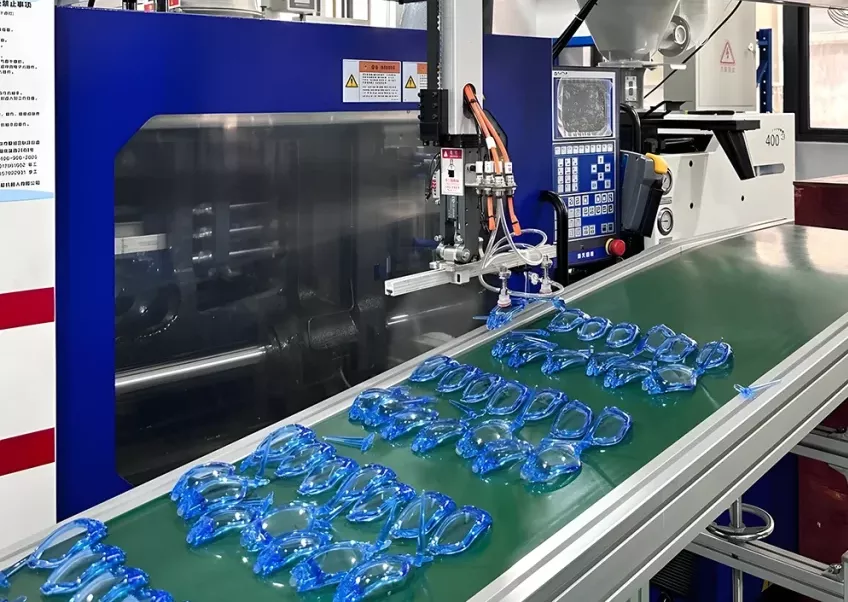
We evaluate the Mold Release system's effect on part demoulding, surface quality and processing stability
Based on the test results, we select the Mold Release masterbatch grade and dosage to meet part and moulding-process requirements.
| No. | Grade | Carrier | Features | Application | TDS | SDS |
|---|---|---|---|---|---|---|
| 1 | RCL-04101-HD | HDPE | Easier release of polyethylene products from the mold | Injection Molding | TDS | SDS |
| 2 | RCL-04103-PP | PP-H | Easier release, reduced scratch visibility | Injection Molding | TDS | SDS |
| 3 | RCL-04104-PP | PP-R | Easier release of transparent polypropylene products | Injection Molding / Thin-wall | TDS | SDS |
| 4 | RCL-04105-PA | PA | Release of complex-shaped parts at elevated processing temperatures | PA6 / PA66 / Injection Molding | TDS | SDS |
| 5 | RCL-04106-PET | PET | Release of transparent products at elevated processing temperatures | PET / Injection Molding | TDS | SDS |
| 6 | RCL-04107-ABS | ABS | Easier release, reduced scratch visibility | ABS / Injection Molding | TDS | SDS |
| 7 | RCL-04114-ABS | ABS | Enhanced release of complex-shaped housing parts | Complex Parts / ABS / Injection Molding | TDS | SDS |
| 8 | RCL-04108-PC | PC | Release of transparent products at elevated processing temperatures | PC / Injection Molding | TDS | SDS |
The recommended grade is selected with regard to the polymer base, part design, processing conditions and surface requirements. Detailed characteristics are provided in the product technical specification.
We will select the grade and dosage with regard to the polymer, product design and molding conditions