Insufficient material whiteness →
Increase the perceived whiteness of the polymer product

Correction of whiteness and color shade of polymer products
TechnoAdd™ Optical Brightener is a range of masterbatches with optical brighteners for increasing perceived whiteness and correcting the shade of polymer materials.
Polymer products can acquire a yellowish shade due to characteristics of the raw materials, processing conditions, recycled-material content and formulation composition. This affects the appearance of packaging, films and other products subject to requirements for whiteness and color stability.
Optical brighteners absorb ultraviolet radiation and convert it into visible blue light. This compensates for the yellowish shade and increases the perceived whiteness of the material.
TechnoAdd™ Optical Brightener masterbatches are used in films, packaging, injection-molded products, pipes, fibers and other polymer materials. The grade and dosage are selected with regard to the polymer base, initial shade and product-appearance requirements.
Increasing whiteness and improving the appearance of polymer products
Increase the perceived whiteness of the polymer product
Help compensate for undesirable yellowness of the material
Allow appearance to be corrected with regard to the characteristics of the original raw material
Help reduce the visual effect of the original shade of recycled material
Allow changes in raw-material color to be taken into account and the formulation to be adjusted
Help select the required whiteness and shade of the finished product
Solutions for increasing whiteness and correcting the shade of polymer products
We take into account the polymer, initial shade and product-appearance requirements
We take into account the compatibility of the brightener with the polymer used and the formulation composition
We assess raw-material color, degree of yellowness and recycled-polymer content
We determine the required whiteness and allowable shade deviation
We take into account temperature, production conditions and product-forming characteristics
We assess the effect of material thickness and product shape on color perception
We take into account the effect of titanium dioxide, pigments, UV absorbers and other formulation components
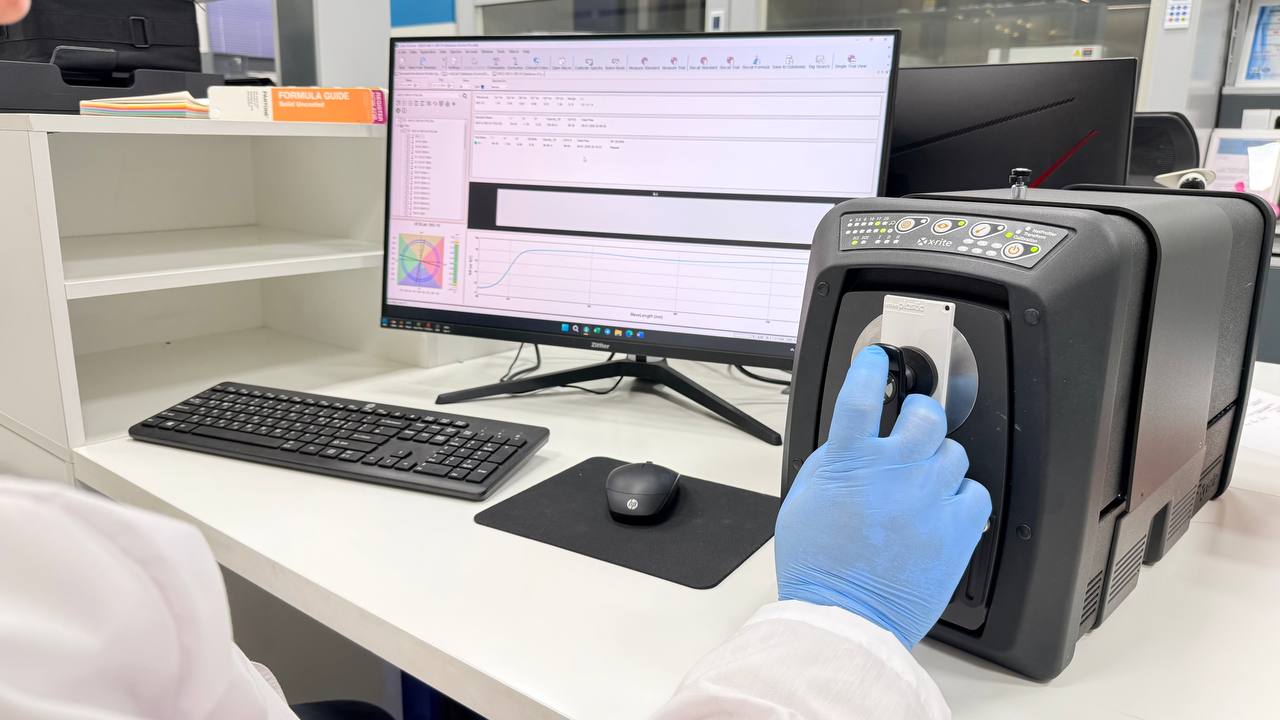
We evaluate the effect of the optical brightener on whiteness, color characteristics and material appearance
Based on test results, we select the optical-brightener grade and dosage to meet the product's whiteness and shade requirements.
| No. | Grade | Carrier | Active component | Features | Application | TDS | SDS |
|---|---|---|---|---|---|---|---|
| 1 | OB-03401-PE | PE | Benzoxazole fluorescent system | Increased visual whiteness and compensation of polyethylene yellowing | Film extrusion / blow molding / injection molding | TDS | SDS |
| 2 | OB-03407-PE | PE | Benzoxazole system with correcting pigment | Increased visual whiteness with additional correction of the yellowish tint of polyethylene | White-film extrusion / bag production / blow molding | TDS | SDS |
| 3 | OB-03402-PP | PP | Heat-resistant bisbenzoxazole system | Increased visual whiteness of polypropylene at elevated processing temperatures | PP raffia / fibers and nonwovens / injection molding | TDS | SDS |
| 4 | OB-03408-PP | PP | Bisbenzoxazole system with correcting pigment | Increased visual whiteness with additional correction of the yellowish tint of polypropylene | PP raffia / injection molding / sheet extrusion | TDS | SDS |
| 5 | OB-03403-PS | PS | Benzoxazole system for foamed polymers | Increased visual whiteness of polystyrene and foamed-polystyrene products | Sheet extrusion / thermoforming / EPS and XPS production | TDS | SDS |
| 6 | OB-03404-PS | PS | Stilbene fluorescent system | Increased visual whiteness and formation of a cool tint in polystyrene | Sheet extrusion / thermoforming / injection molding | TDS | SDS |
| 7 | OB-03405-AB | ABS | Heat-resistant bisbenzoxazole system | Increased visual whiteness of ABS and compensation of yellowing at elevated processing temperatures | Housing-part molding / sheet extrusion | TDS | SDS |
| 8 | OB-03409-AB | ABS | Bisbenzoxazole system with correcting pigment | Increased visual whiteness with additional correction of the yellowish tint of ABS | Housing-part molding / sheet extrusion | TDS | SDS |
| 9 | OB-03406-PA | PA | High-temperature bisbenzoxazole system | Increased visual whiteness of polyamide during high-temperature processing | Fiber production / molding of technical products | TDS | SDS |
The recommended grade is selected with regard to the polymer base, initial material shade, processing conditions and product-whiteness requirements. Detailed characteristics are provided in the product technical specification.
We will select an Optical Brightener with regard to the polymer, initial color, processing temperature and required optical properties of the product.